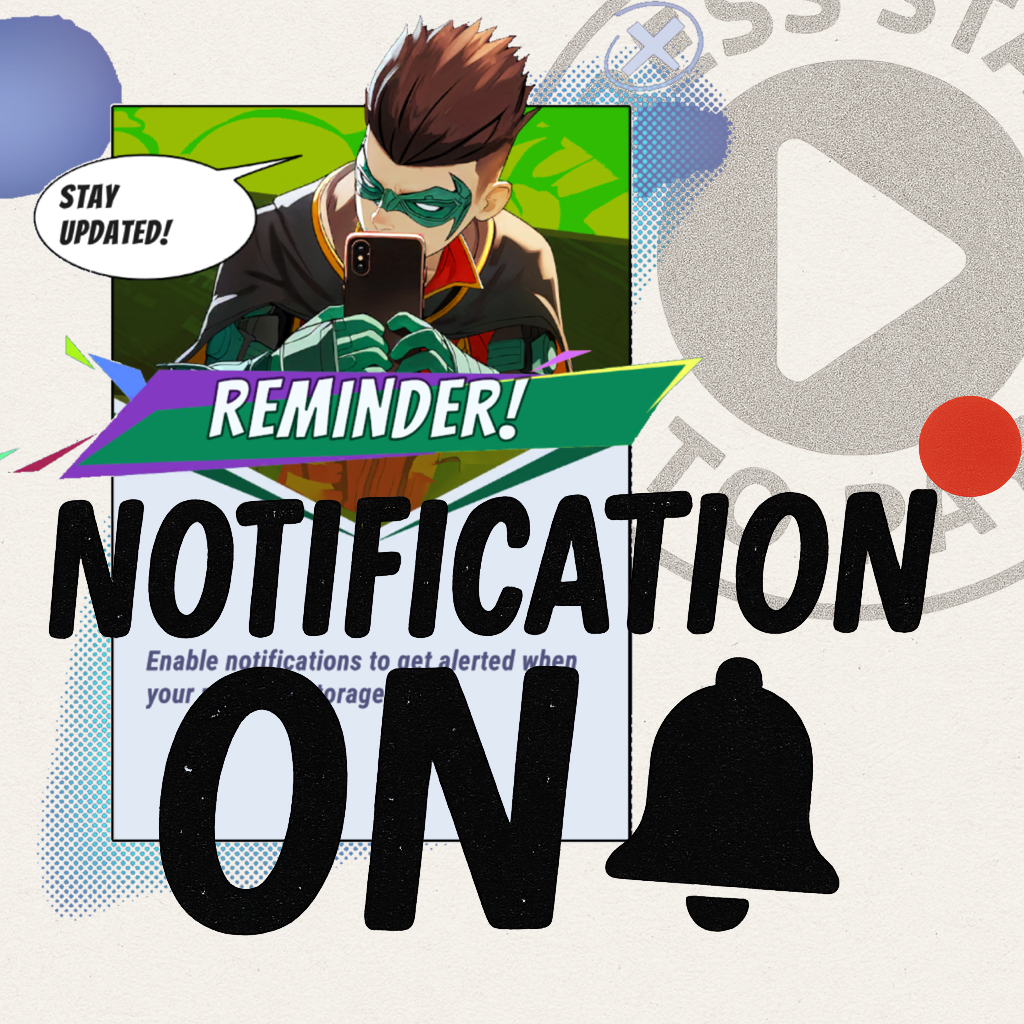
Apparently, you can spam notifications even to those who’ve already said no.
I recently noticed an interesting detail in DC: Dark Legion.
If a player has notifications disabled, a small pop-up appears once a day when logging in, suggesting to turn them back on. After a while, you start to wonder: maybe it’s easier to just enable them — if only to stop the pop-up from showing up again.
This observation raises a bigger question about how games approach notification prompts.
Some projects ask for permission right at first launch — even during the tutorial loading screen.
The logic is clear: the funnel is at its widest.
But what’s the point of asking if the player doesn’t yet understand why they might need notifications?
Without context, any system dialog feels intrusive.
Most players simply hit “Not now”, and there may never be a second chance.
Other games show the prompt at the moment of maximum value — for example, right after a player claims a timed reward and sees why a reminder could be useful.
The audience is smaller, but the conversion rate is higher.
The challenge is finding that “perfect moment.”
What do you think — which approach works better?
Or do persistent pop-up reminders like those in DC: Dark Legion eventually make all timing strategies irrelevant?
I recently noticed an interesting detail in DC: Dark Legion.
If a player has notifications disabled, a small pop-up appears once a day when logging in, suggesting to turn them back on. After a while, you start to wonder: maybe it’s easier to just enable them — if only to stop the pop-up from showing up again.
This observation raises a bigger question about how games approach notification prompts.
Some projects ask for permission right at first launch — even during the tutorial loading screen.
The logic is clear: the funnel is at its widest.
But what’s the point of asking if the player doesn’t yet understand why they might need notifications?
Without context, any system dialog feels intrusive.
Most players simply hit “Not now”, and there may never be a second chance.
Other games show the prompt at the moment of maximum value — for example, right after a player claims a timed reward and sees why a reminder could be useful.
The audience is smaller, but the conversion rate is higher.
The challenge is finding that “perfect moment.”
What do you think — which approach works better?
Or do persistent pop-up reminders like those in DC: Dark Legion eventually make all timing strategies irrelevant?